Augmentation. Automation. Agency.
The system runs itself. The organization improves it. My Managing Director comes to me when something needs a decision.
I don't just use AI. I built an AI-native engineering organization where intelligence is earned, evidence is everything, and agency is the ultimate unlock.
Marc Alexander — Accountable Operator, Abyss Applied
The organization
Once proven, it runs without me. I don't manage the engineers directly, and I didn't start with that arrangement.
- Accountable Operator Marc Alexander
- Managing Director AI
- Assistant to the Managing Director
- Managing Principal Engineer
- Managing Principal Engineer
- Managing Principal Engineer
- Managing Principal Engineer
-
-
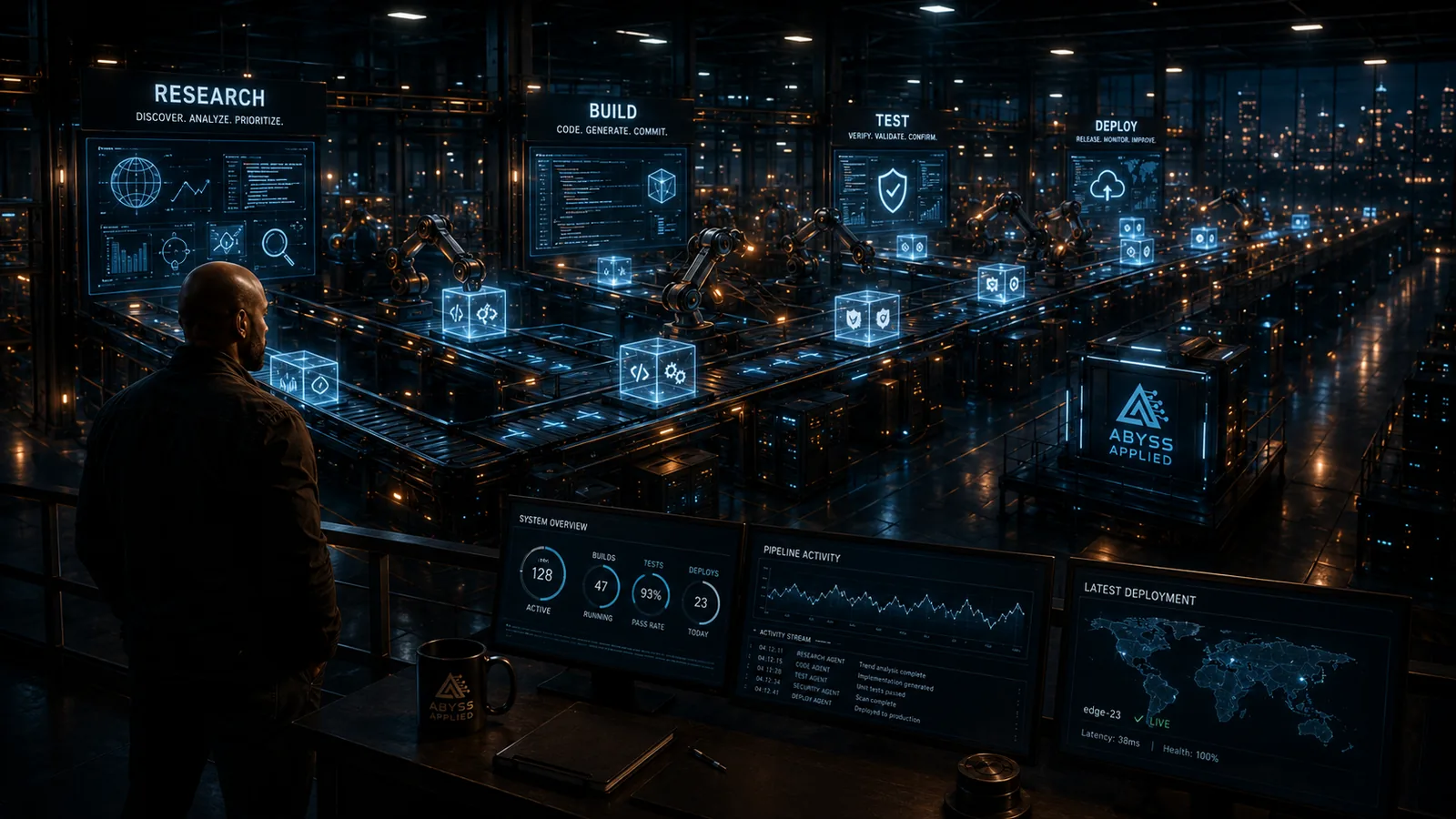
Each principal engineer owns a workspace. Inside it, the scope is the whole of engineering — not a single function.
- ToolDocs autonomously researched
- SmartTools autonomously researched
- Website & hubs automated
- Deployment automated
- Directed engineering manually directed, AI-augmented
Three ways
I work with AI in three distinct ways at Abyss Applied: augmentation, automation, and agency. They aren't interchangeable, and I don't trust them equally.
I use augmentation to build. I use automation to operate. I grant agency when the evidence earns it.
Augmentation
We build together.
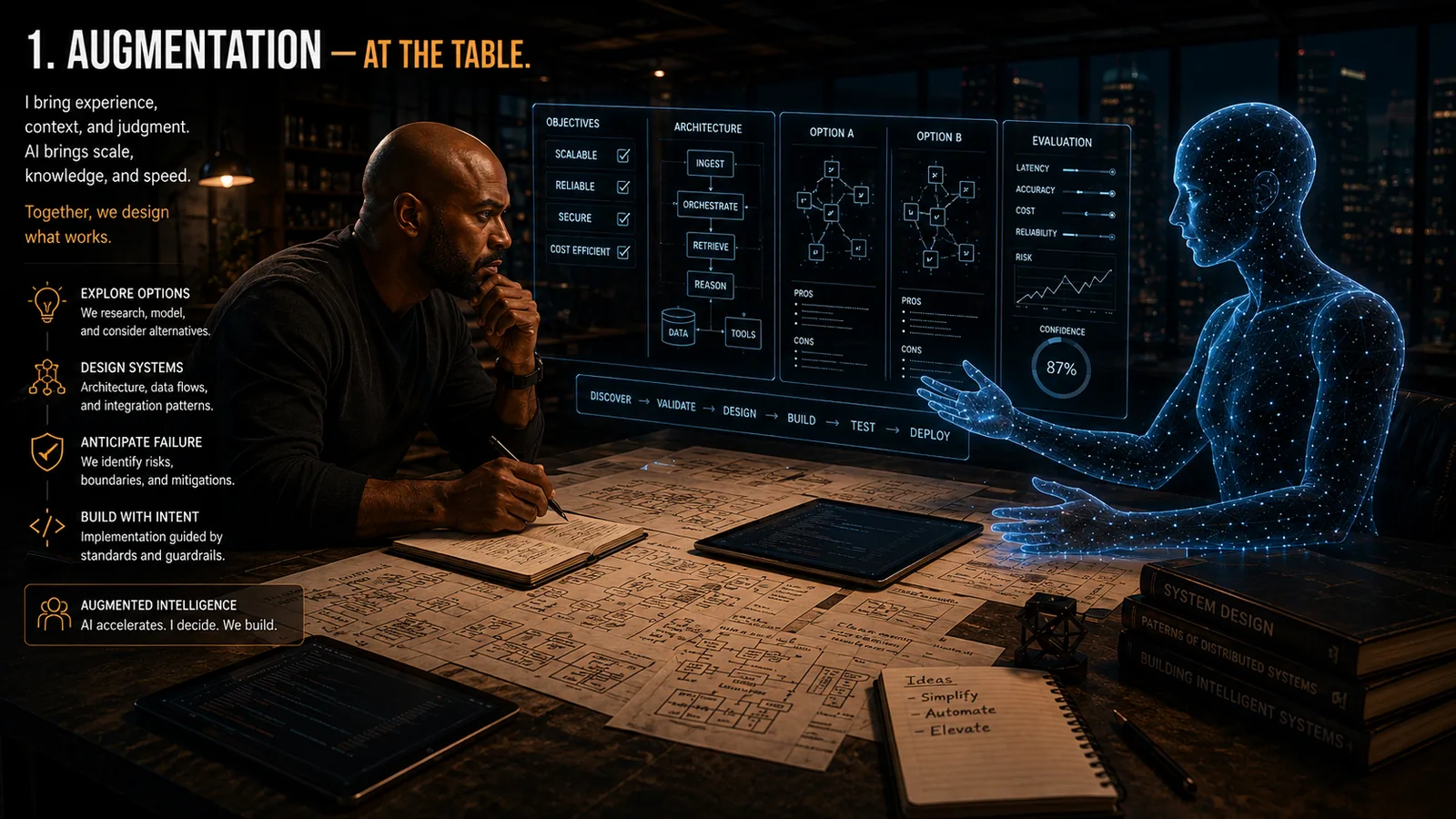
Some work is deliberately collaborative.
I bring the domain knowledge, engineering judgment, intent, and accountability. AI brings another reasoning surface: challenging assumptions, exploring alternatives, finding gaps, and helping turn ideas into implementations faster than I could alone.
Neither party is simply handing work to the other.
The result is force multiplied through augmentation.
Automation
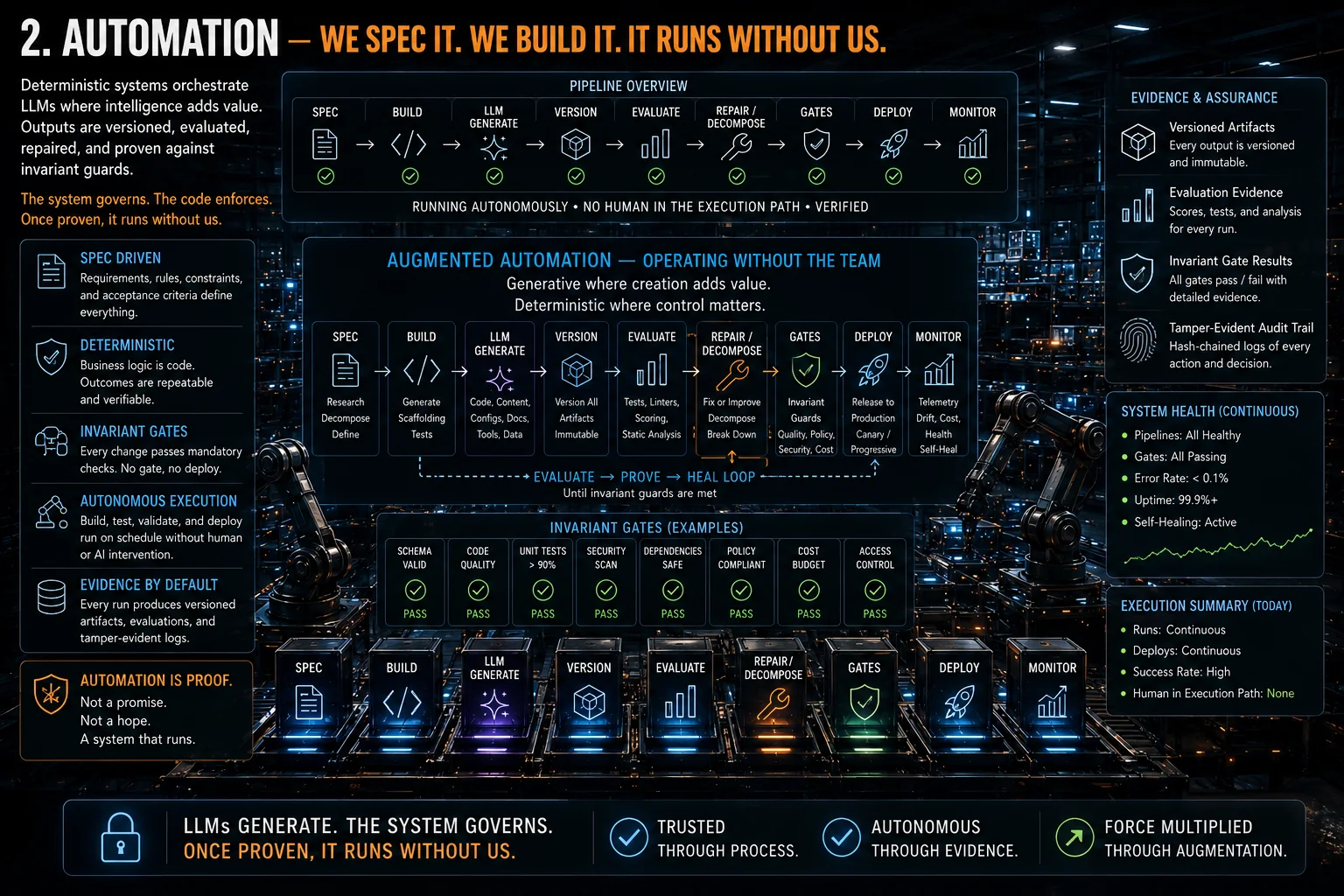
We spec it. We build it. It runs without us.
Automation is where I remove myself from work the system has demonstrated it can perform reliably. Research happens. Software gets built. Tests run. Deployments happen. Evidence is retained.
I don't need to be in every loop.
AI can propose. Deterministic code and invariant gates decide. Once proven, the resulting automation runs without either AI reasoning or me in the execution path.
That distinction matters more than the word "automation" usually carries. Handing work to a system is not the same as handing it production authority. A gate either verifies or it fails; nothing proceeds on a probable answer.
Agency
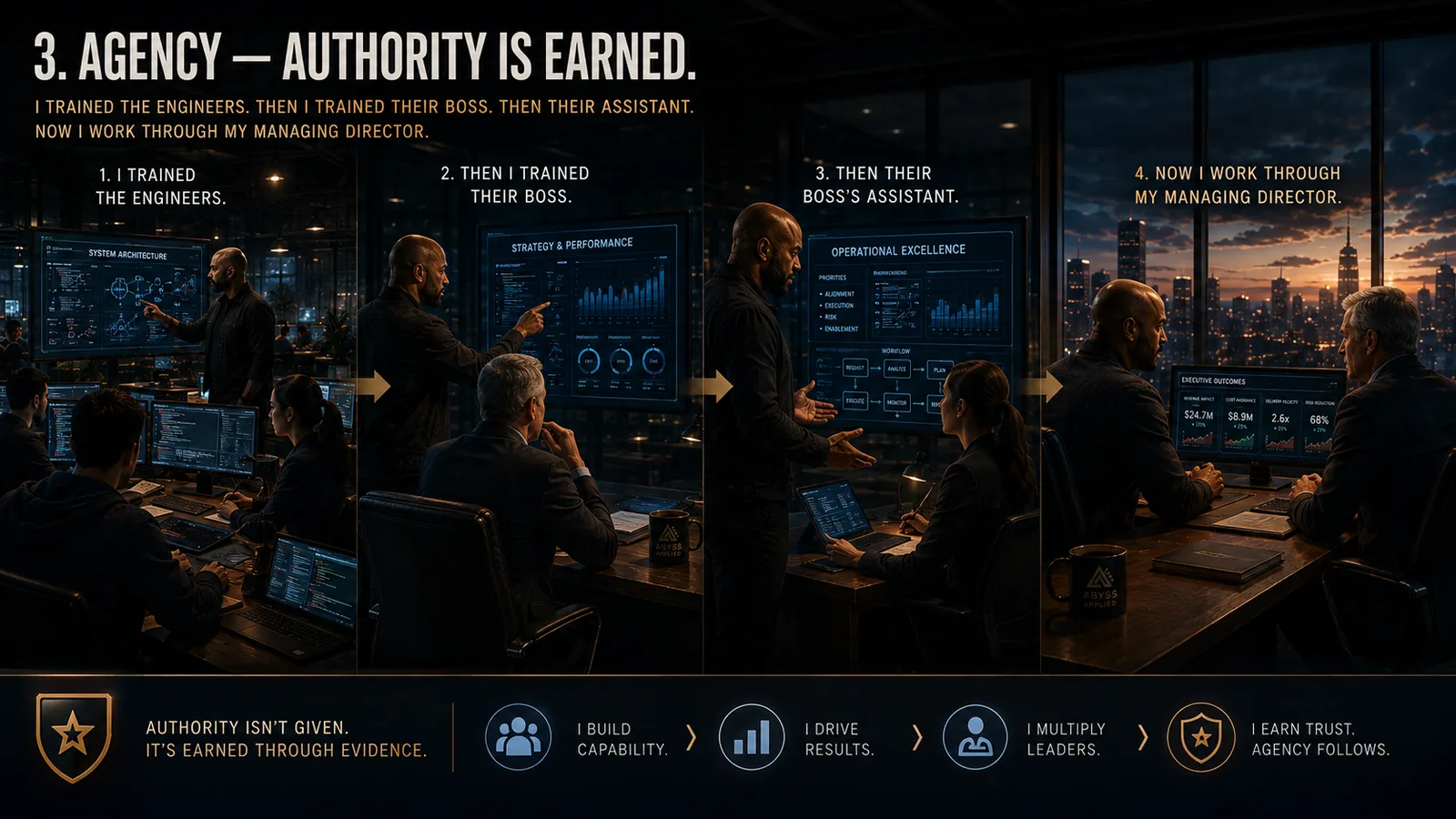
Authority isn't given. It's earned.
Agency is different.
I work primarily through my Managing Director now. I don't directly manage every engineer, and I didn't start by giving the system that authority.
It earned it.
I trained the engineers first. I established their constraints, evaluated their work, corrected failure patterns, and learned where they were reliable. Then I trained the Managing Director to manage them. Then the Managing Director Assistant.
Authority moved upward only as the evidence supported it.
Telemetry
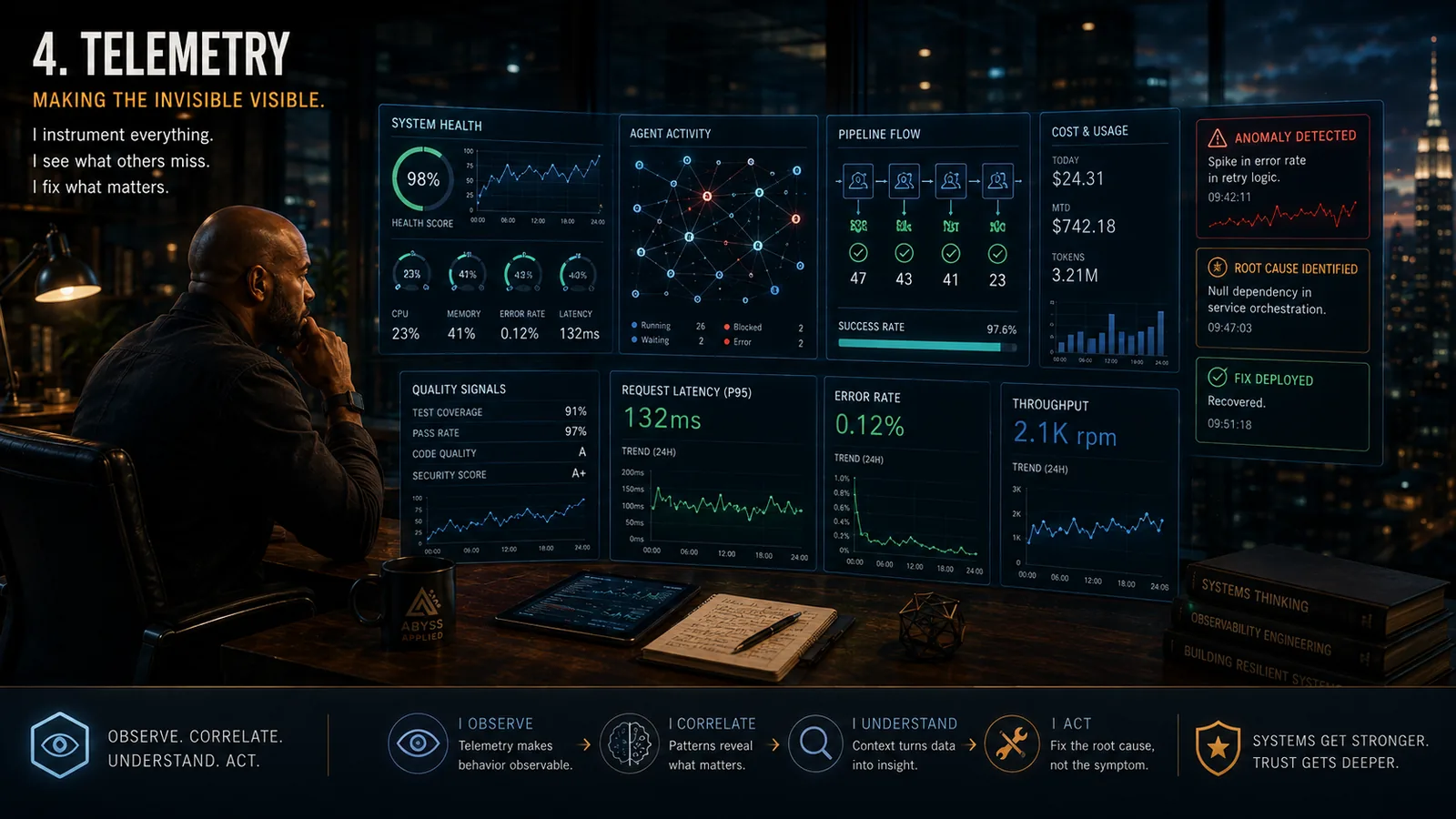
Making the invisible visible.
Telemetry is what makes delegation possible. It makes model behavior observable. Once behavior is observable, patterns become measurable and increasingly predictable.
When something fails, I don't automatically change the prompt. I determine where the failure actually belongs — the bot, the code, the infrastructure, or the process. Then I repair it, evaluate it again, and decide whether the system has earned more trust.
That creates the operating loop: observe, evaluate, repair, verify, trust, delegate — and back to observe.
-
Observe
Telemetry makes behavior observable.
-
Evaluate
Patterns become measurable and predictable.
-
Repair
Fix the bot, the code, the infrastructure, or the process.
-
Verify
Test again. Confirm the fix.
-
Trust
Confidence is earned with evidence.
-
Delegate
Expand authority. Increase autonomy.
…and back to Observe.
Earned Agency
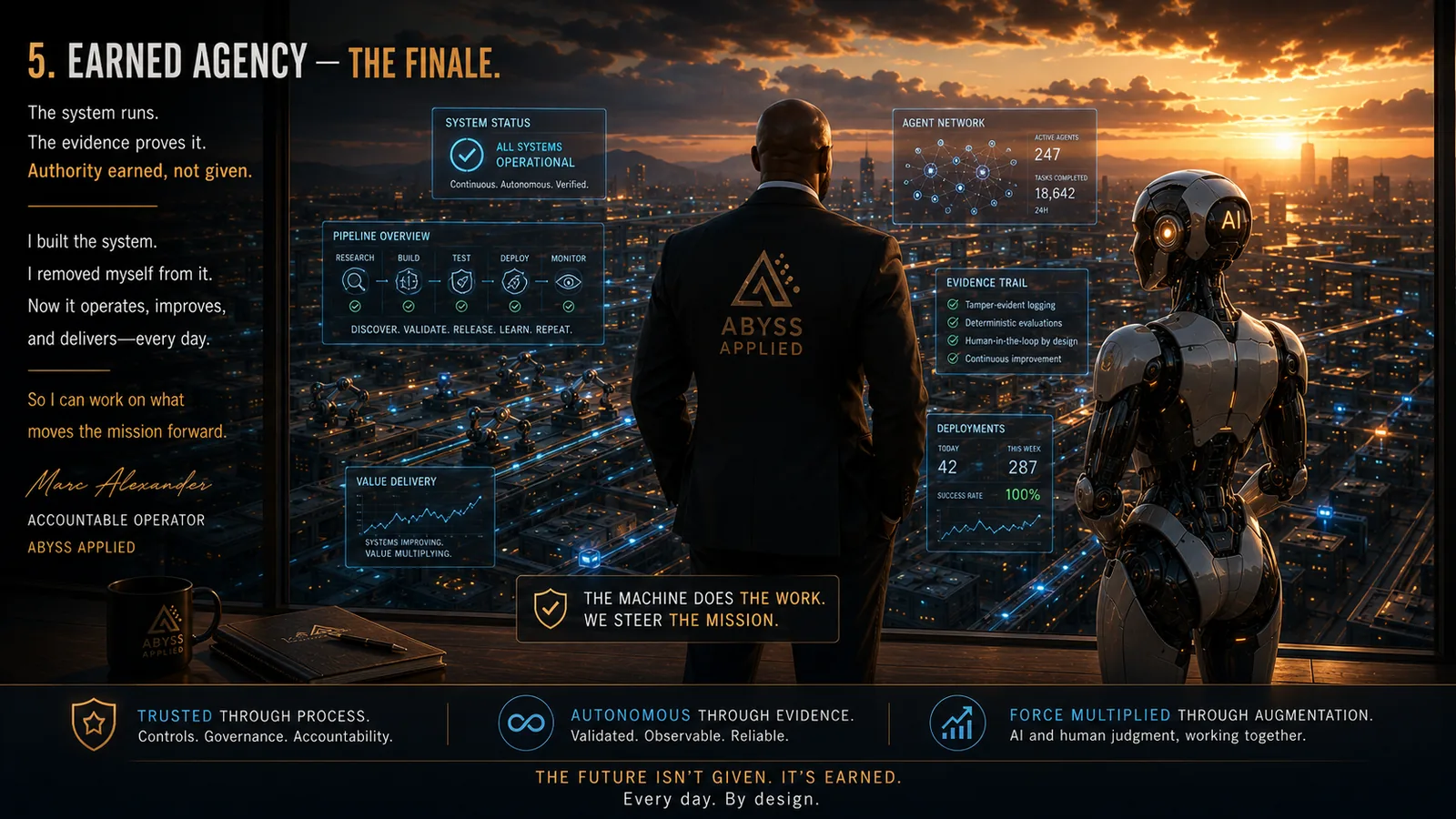
The evidence decides how much authority moves.
I built the system. I removed myself from it. Now it operates, improves, and delivers — every day.
So I can work on what moves the mission forward.
Agency isn't something I give an AI because the model is impressive. Agency is earned through demonstrated behavior inside controlled systems.
That is AI fluency as I practice it at Abyss Applied:
- Augment what benefits from both of us.
- Automate what no longer needs me.
- Delegate agency only when it has been earned.
What this rests on
Invariants
Derived from the repository at build. A value that could not be confirmed against this build is a defect, and says so.
- Guards every deploy must clear
- 83
- derived from the deploy guard chain definition · as of
Signals
Read from the production catalogs at build. A value older than the freshness window is itself information — it means the pipeline has not run, not that the figure is wrong.
-
76 SmartTools live
read from the SmartTools production catalog · last published
-
85 ToolDocs live
read from the ToolDocs production catalog · last published